
A relocation involves more than a fit-out: understanding what you need, finding and testing buildings, negotiating terms, designing and building the new space, and planning the move itself. Starting 18 to 24 months before your lease ends gives you choice and a stronger negotiating position.
Before committing to a move, check whether your current office could be re-planned or refurbished to meet your needs. Sometimes it can, for a fraction of the cost.
How it runs
A relocation, step by step
Brief and search
Workplace strategy and space requirements first, then shortlisting buildings with your agent.
Feasibility and terms
Test fits and costs for each building, used to negotiate the landlord’s contribution and works.
Design and fit-out
Designing and delivering the new space alongside IT, furniture and building services.
The move
Packing, IT relocation, furniture installation and a working office on the first morning.
What to get right
Treat the move date as fixed
Everything works back from the date your current lease ends. Build the programme with that date at the end and genuine slack along the way: furniture lead times, IT installation, landlord approvals and building control all take longer than expected.
Remember the space you are leaving. Dilapidations, the cost of returning it to the condition the lease requires, can be significant and is easy to leave out of the budget.
- Start early, and decide who in the business owns the move.
- Agree the landlord’s works and contributions in writing.
- Plan IT and telecoms from day one.
- Tell staff early and involve them in the decisions that affect them.
A good fit if…
- Your lease ends within two years.
- You have outgrown your office, or need much less space than you have.
- You want independent advice alongside your agent.
Probably not the right fit if…
- You only need a removals firm, with no planning or design.

From the archive
Marine Capital
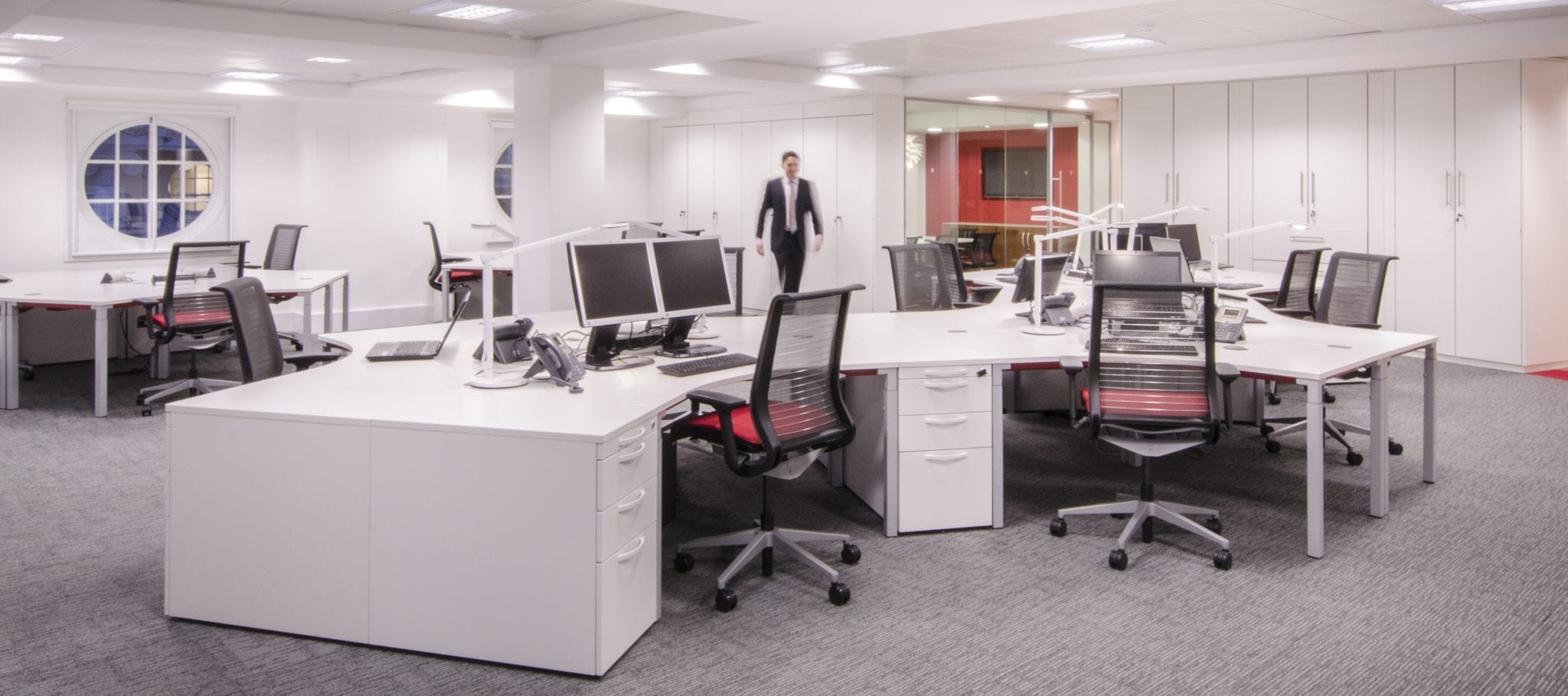
When Marine Capital moved to larger premises in Mayfair, the aim was an office that helped attract and keep good people: modern and welcoming rather than stuffy or traditional.
Questions
What clients usually ask
How long does an office relocation take?
From first brief to moving in, often a year or more. The fit-out itself is only one part. If you can, start 18 to 24 months before your lease ends.
What are dilapidations?
The cost of returning the space you are leaving to the condition your lease requires. It is negotiated with the landlord and can be substantial, so take advice early and include it in the budget.
Should we refurbish instead?
Sometimes that is the better answer. A side-by-side comparison of staying and moving makes the decision much clearer.
Related
Where this leads
Building feasibility · Testing buildings before you sign
Office refurbishment · The case for staying
Move management and churn · Planning the move itself
Start a conversation
Planning a move, a refurbishment or a rethink?
Tell us about the space, the people who use it and the date you are working to. You will get a straight answer about what it needs, what it is likely to cost and what to do first.