
Most of a fit-out’s environmental impact comes from the materials it uses and throws away, not just the energy it consumes afterwards. Reusing partitions, ceilings, flooring and furniture, and choosing products that can be repaired and reconfigured, makes a bigger difference than most people expect.
Energy still matters, for running costs as much as carbon. Minimum energy-efficiency standards already apply to commercial lettings in England and Wales, and the government has consulted on raising them, so a building’s EPC rating is worth checking before you commit to a lease.
What it involves
Where the impact is
Reuse and refurbishment
Keeping what still works, and refurbishing furniture and finishes rather than replacing them.
Materials
Durable, repairable products with recycled content and clear information on where they come from.
Energy
Efficient lighting and controls, sensible zoning of heating and cooling, and an eye on the building’s EPC.
Waste
Surplus furniture reused or donated, and construction waste separated and recorded.
What to get right
Avoid the greenwash
Sustainability claims are easy to make and hard to check. Be specific: what was reused, what was recycled, what changed in energy use. Numbers you can stand behind are worth more than a long list of features.
Certification schemes such as BREEAM, NABERS UK and WELL measure different things: overall building performance, actual energy use in operation, and occupant health and wellbeing. Decide which, if any, matters to your organisation before designing to one.
- Survey what can be reused before you design anything.
- Ask suppliers about take-back schemes, spare parts and warranties.
- Keep a record of materials and waste for your reporting.
- Measure energy use after you move in, not just at design stage.
A good fit if…
- You have sustainability targets and need a fit-out that supports them.
- You want to cut cost and carbon by reusing more.
- You are weighing up buildings with different energy ratings.
Probably not the right fit if…
- You want a certification badge without changing how the project is done.
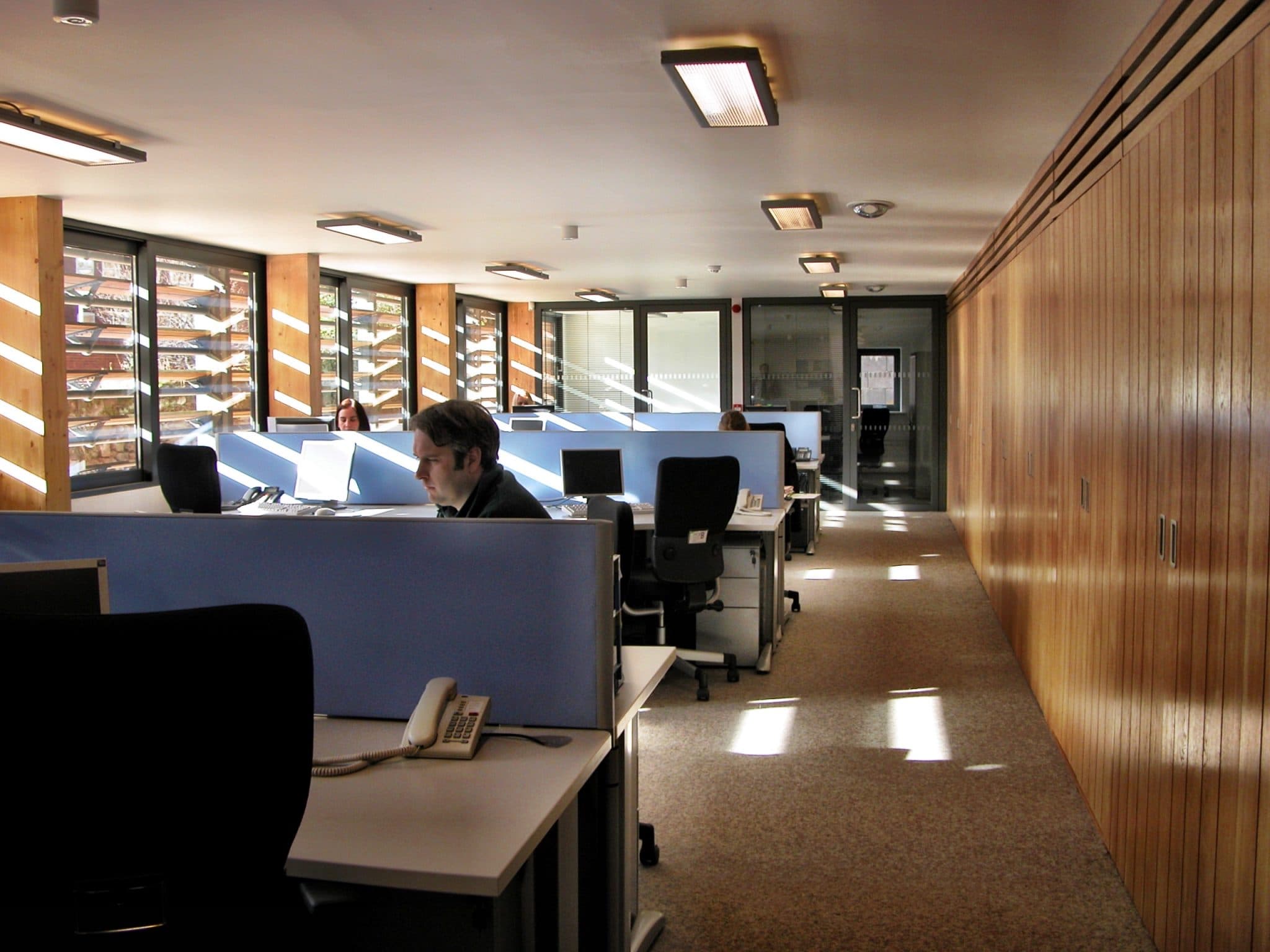
From the archive
Devon Wildlife Trust
Reusing a fire-damaged, listed mill rather than building new, Devon Wildlife Trust created a headquarters with its history intact, its mill machinery restored and stream-side habitats opened up around it.
Questions
What clients usually ask
Does a sustainable fit-out cost more?
Not necessarily. Reusing existing elements often costs less than replacing them. Some higher-performance products cost more up front but less to run and maintain.
What is embodied carbon?
The carbon emitted in making, transporting and installing materials, as opposed to the energy used to run the building. For a fit-out, it is often the larger share.
Related
Where this leads
Office refurbishment · Reuse in practice
Office furniture · Repairable, reusable furniture
Building feasibility · Checking a building’s energy rating
Start a conversation
Planning a move, a refurbishment or a rethink?
Tell us about the space, the people who use it and the date you are working to. You will get a straight answer about what it needs, what it is likely to cost and what to do first.