Size a hybrid office on evidence, not headcount: desk-sharing ranges, mid-week peaks, meeting and focus space, and what it means for your lease.
In short
- Size the office for its busiest regular day. Total headcount and the weekly average both give the wrong answer.
- UK evidence shows office use has settled well below pre-pandemic levels, with a clear Tuesday-to-Thursday peak 1.
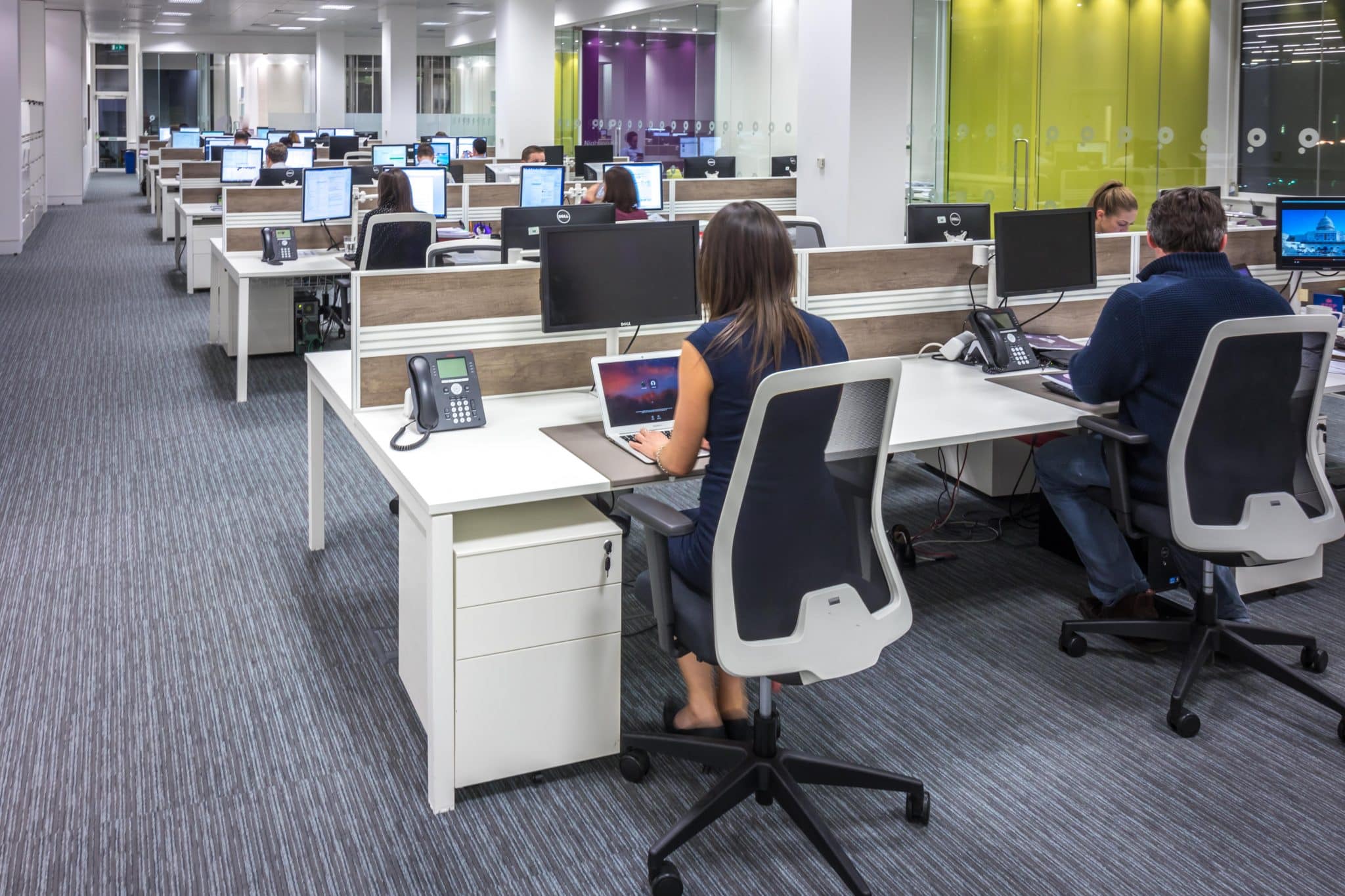
- Desk-sharing ratios typically range from about 1.1 to 2 people per desk, depending on how predictable attendance is. Work out your own ratio from your own data 13.
- Space no longer needed for desks usually needs to become meeting, collaboration and quiet space. It should not automatically be given up.
- A short utilisation study, checked against managers’ plans, costs very little next to a long lease taken on the wrong assumptions.
What the evidence says
Hybrid working is now an established pattern for a large minority of people, not for everyone. The Office for National Statistics found that 28% of working adults in Great Britain worked a hybrid pattern in early 2025. The share was much higher among graduates (41%) and people earning £50,000 or more (45%) 2. A professional services firm and a contact centre will therefore need very different offices.
The fullest UK review of how offices are actually used is the BCO’s 2025 Review of Post-Pandemic UK Office Utilisation. It found that average UK desk utilisation across the working week has settled at about 30%, against about 44% before the pandemic. The Tuesday-to-Thursday average is about 40% 1. Results varied widely between buildings, from 13% to 53% on average, so a national benchmark is only a starting point. Swipe-card data quoted in the review showed the typical weekly pattern: about 25% on Mondays, 37% from Tuesday to Thursday and 19% on Fridays 1.
Occupier surveys use different methods and report higher figures, but the pattern is the same. CBRE’s 2025 European occupier survey recorded average weekly utilisation of 46% and an average peak day of 71% 3. Whichever figure you use, the busiest day is well above the average.
Plan for the peak, not the average
If you plan to a 40% weekly average, there will not be enough room on Wednesdays. The BCO review recommends planning for the peak or mid-week level. Where an organisation does not yet know its own pattern, it suggests assuming about two-thirds of people are in as a lower-risk default. It also advises adding some spare desks and having a fallback for the rare day when nearly everyone comes in, such as touchdown points, breakout areas and focus rooms that can take the overflow 1.
A sharing ratio is simply people divided by desks. The BCO review calculates it in one of two ways: 100% divided by peak utilisation, or a target utilisation (often 80%) divided by average utilisation. Its worked examples range from about 1.1:1, for a contact centre with a 90% peak, to about 2:1 where the peak is 50% 1.
As an illustration only: suppose 120 staff, and a study shows the busiest day reaching 60%, or 72 people. Adding a margin for growth and visitors might give 80 desks, a ratio of 1.5:1. The ratio follows from the data. Do not pick it first.
The market is moving towards higher ratios. CBRE found that the share of occupiers using 1 to 1.5 people per desk is expected to fall from 53% to 28% within two years, and that unassigned desks are now the norm for 61% of occupiers 3. The same survey also found that 21% of companies which had cut their space too far were now expanding again, up from 7% the year before 3. Cutting too hard has a cost.
From desks to a range of settings
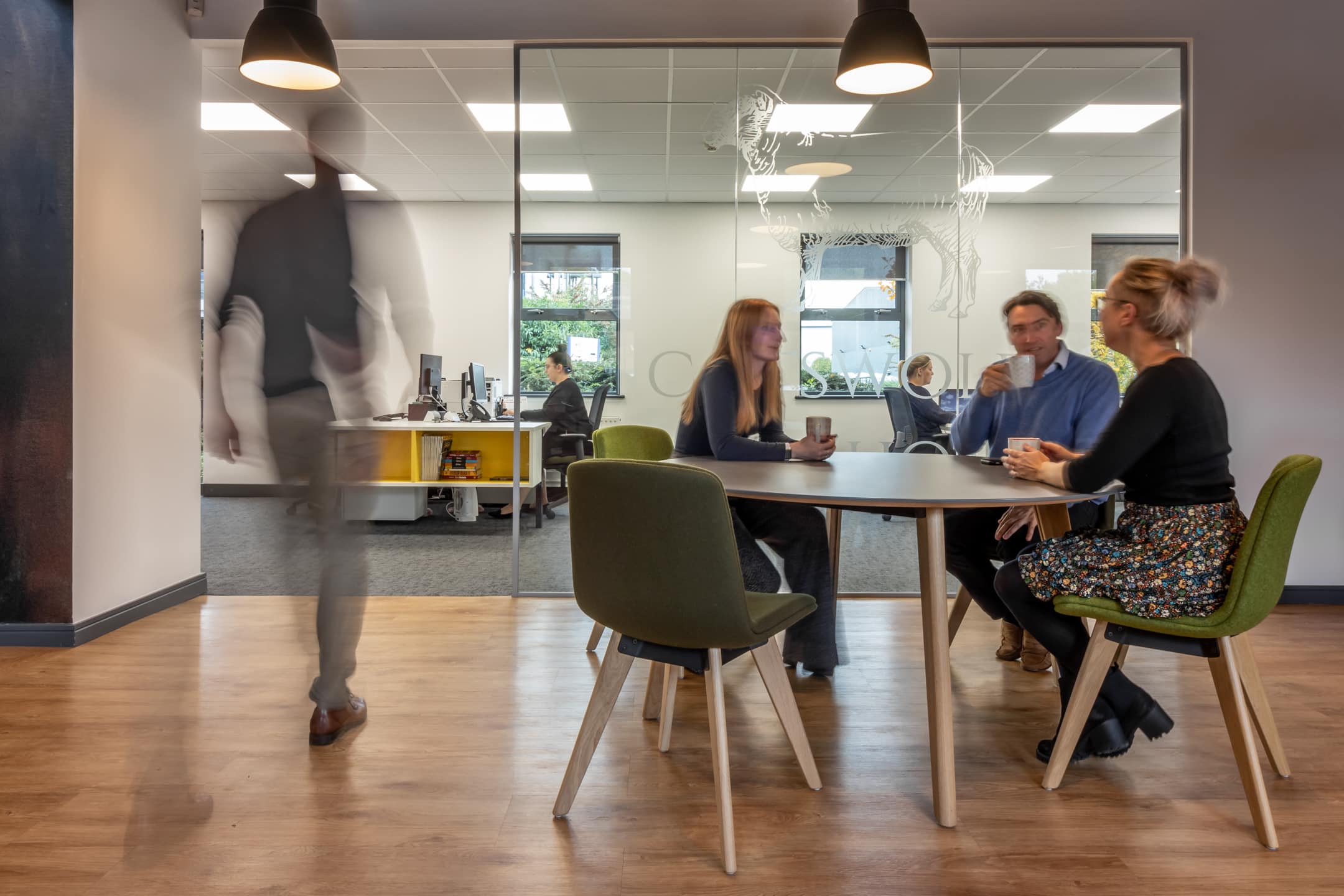
When fewer desks are needed, the space should usually be given new uses rather than simply removed. People come into the office to meet and collaborate, but they still need to concentrate while they are there. Leesman’s 2026 analysis found that 89% of employees rate focused individual work as important, yet only 35% are satisfied with noise levels 4.
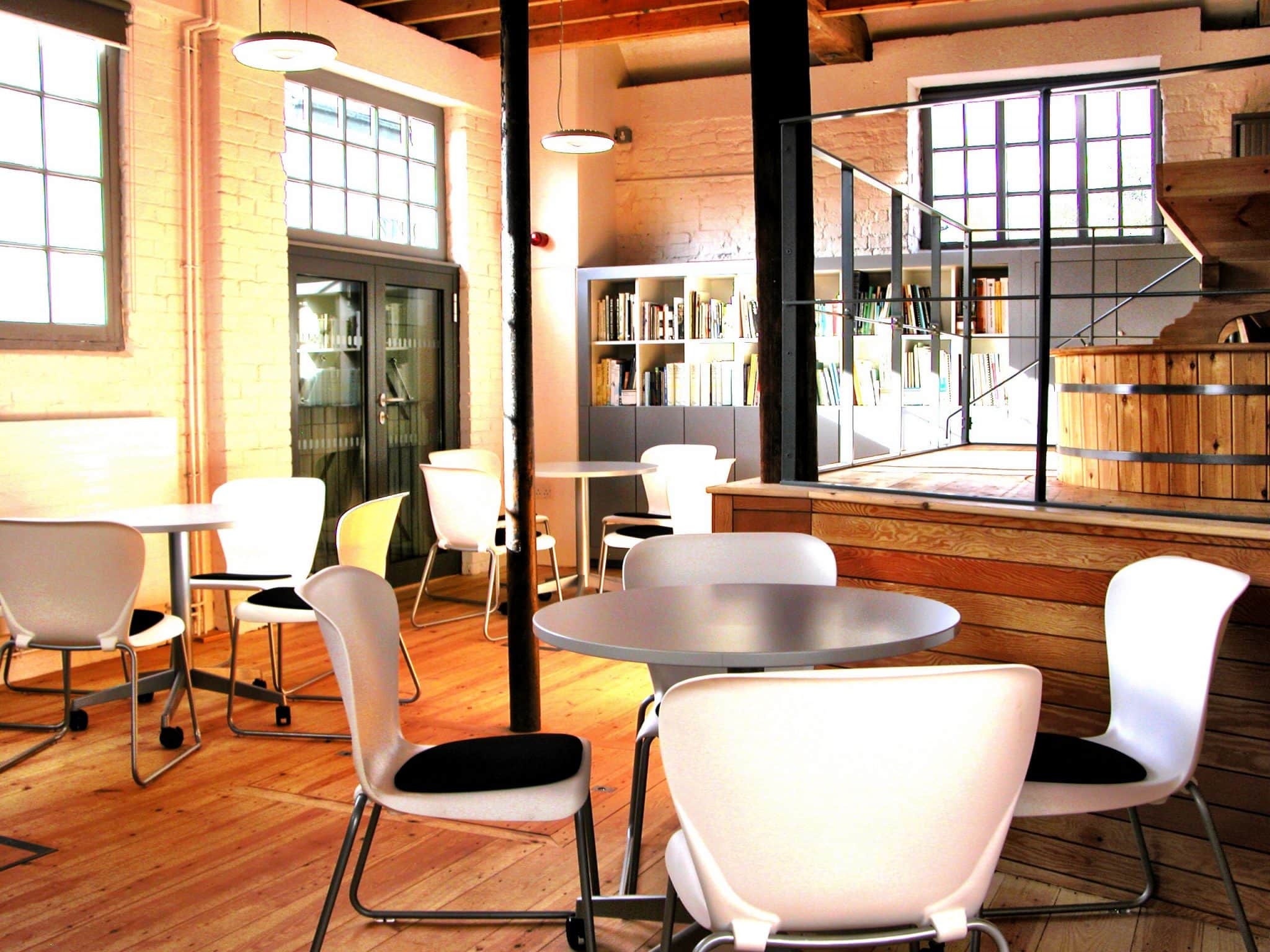
A balanced hybrid floor usually includes:
- small meeting rooms for two to four people, which the BCO review notes can also absorb peak demand when used by one or two people 1
- enclosed booths for video calls
- a genuinely quiet area for focused work
- larger project or team rooms that can be booked for several days at a time
- social and breakout space that doubles as overflow seating
For general office space, the BCO has proposed designing for 10 to 12 m² per planned occupant, a more generous allowance than before the pandemic 1.
How to run a utilisation study
- Decide what you need to know. Desk use, meeting room use, team patterns, day-of-week peaks.
- Choose the methods, knowing their limits. Access-card data is cheap but shows who entered the building, not which desks were used. Desk bookings overstate use unless people have to check in. Sensors give continuous data but may miss desks left briefly with belongings on them. Walk-through observation, usually hourly over one or two weeks, covers every type of space but takes a lot of labour. Staff surveys are inexpensive, but people tend to overestimate how often they are in the office 1.
- Pick a representative period. Avoid school holidays and unusual weeks. The BCO warns that short studies can be distorted by seasonal variation 1.
- Record meeting rooms properly. Compare bookings with actual use, and room size with group size.
- Check the numbers with managers. Ask about planned attendance policies, recruitment and team changes. The BCO recommends verifying data with department heads 1.
- Model several scenarios. For example, the current pattern, a policy of set office days, and growth.
What it means for lease decisions
Occupiers are reconsidering their options. In Irwin Mitchell’s 2026 survey of 500 UK office decision-makers, reconfiguring existing space remained the most common plan (43.4%). The share planning to relocate rose to 31.6% from 23.2%, and 78% expected office attendance to rise in the coming year 5.
That has practical consequences:
- Do not sign up for space based only on headcount. Use peak data, plus a sensible margin.
- Build in flexibility. Break options, rights over adjoining space, or a smaller core office with flexible space for overflow. CBRE found occupiers aiming to hold 29% of their portfolios in flexible space by 2027 3.
- Consider reconfiguring before moving. A replanned existing office can sometimes cope with the new pattern at lower cost and disruption.
- Ask about shared facilities. In multi-tenant buildings, shared meeting suites or overflow co-working space can cover occasional peaks, an approach the BCO review also suggests 1.
- Test against the busy day. If people regularly cannot find a seat mid-week, they will stay at home, and the office will fail at the job it was meant to do.
Sources
- British Council for Offices, Review of Post-Pandemic UK Office Utilisation (Dr Nigel Oseland, July 2025)
- Office for National Statistics, Who has access to hybrid work in Great Britain? (June 2025)
- CBRE, European Office Occupier Sentiment Survey 2025 (October 2025)
- Leesman, Noisy spaces, quiet consequences (March 2026)
- Irwin Mitchell, Office Occupiers Survey 2026 (June 2026)
Figures were checked against the sources listed in October 2026. Benchmarks vary widely between buildings, so use them to frame your own study, not to replace it.